

Dr. Kristine Nograles completed her undergraduate studies with honors at the University of the Philippines where she obtained a Bachelor of Science degree in Molecular Biology and Biotechnology. She attended medical school at the same institution and then specialized in Dermatology and Dermatologic Surgery at the Skin and Cancer Foundation, Manila, Philippines. Her strong interest in immunology led her to pursue a post-doctoral fellowship at the National Cancer Institute, NIH, working with mouse models of autoimmunity and tolerance with Dr. Stephen I. Katz as her mentor. During this time she learned the fundamentals of immunology research; she aspired, however, to pursue more patient focused, translational research. She joined the Laboratory of Investigative Dermatology, under the mentorship of Dr. James Krueger, as a Clinical Scholar to further study skin immunology, with particular focus on the mechanisms that lead to severe psoriasis.
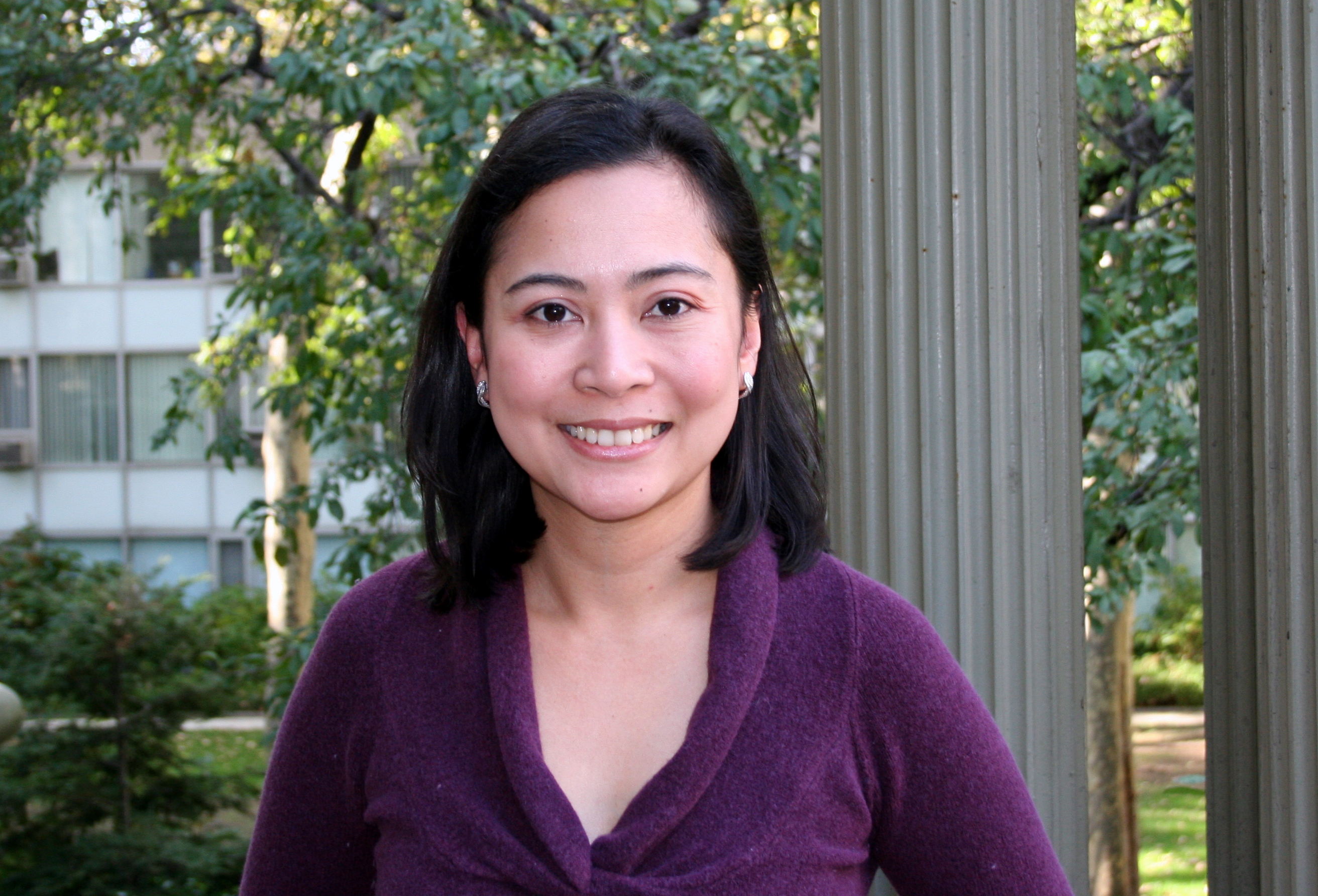
Dr. Kristine "Tinky" Nograles
During her time as a Clinical Scholar, Dr. Nograles, who is known to her friends as Tinky, has focused her studies around the role of Th17 cells in psoriasis and other inflammatory skin diseases. She has identified several cells that may potentially respond to Th17 cells in the psoriatic lesion and hopes to take those discoveries even further. “What I hope to find out is how each individual cell type responds to the messages that Th17 cells send out, and how all of this fits into psoriasis pathogenesis.”
When asked about her experience in the Clinical Scholars program, Dr. Nograles stated, “What I really love about the program is the supportive environment, and not just from Dr. Krueger but also from Dr. (Sarah) Schlesinger and Dr. (Barry) Coller. You can feel that they are all behind you and that they want you to succeed. Finding my way as an investigator would be much more difficult if I felt as if I had to carve out my own path and face resistance. Here it is different; there is encouragement and support, as well as guidance.”
Dr. Nograles explained that her long term plan is to remain in academic dermatology. “It can be a little bit intimidating because my future research will, of course, depend on funding. But I prefer to remain in the discovery front rather than on the receiving end of clinical practice guidelines. When I first began clinical training in dermatology, the most frustrating part was the term, 'etiology unknown' because the causes of many skin diseases remain unknown. I hope to take a more proactive role in discovering the mechanisms of these diseases.” Her next step is to obtain a doctorate, which she hopes to do at The Rockefeller University, while continuing her studies in investigative dermatology.
- About
- Training Programs
- The Rockefeller University Hospital
- Research Resources
- Community Engagement
- Collaborating Institutions
- Faculty
- Research Protocols
- e-Newsletter
- IRB
-
The Rockefeller University Center for Clinical and Translational Science is supported, in part, by a Clinical and Translational Science Award (CTSA) from the National Center for Research Resources and the National Center for Advancing Translational Sciences (NCATS), part of the National Institutes of Health.

January 26, 2010
Meet the Scholar: Kristine Nograles, M.D.
By Jennifer Spada



The Rockefeller University | 1230 York Avenue, New York, NY 10065 | 212-327-8000
Copyright © 2004–2026
The Rockefeller University. All rights reserved.
Contact |
Comments |
Site Map |
Copyright Complaints